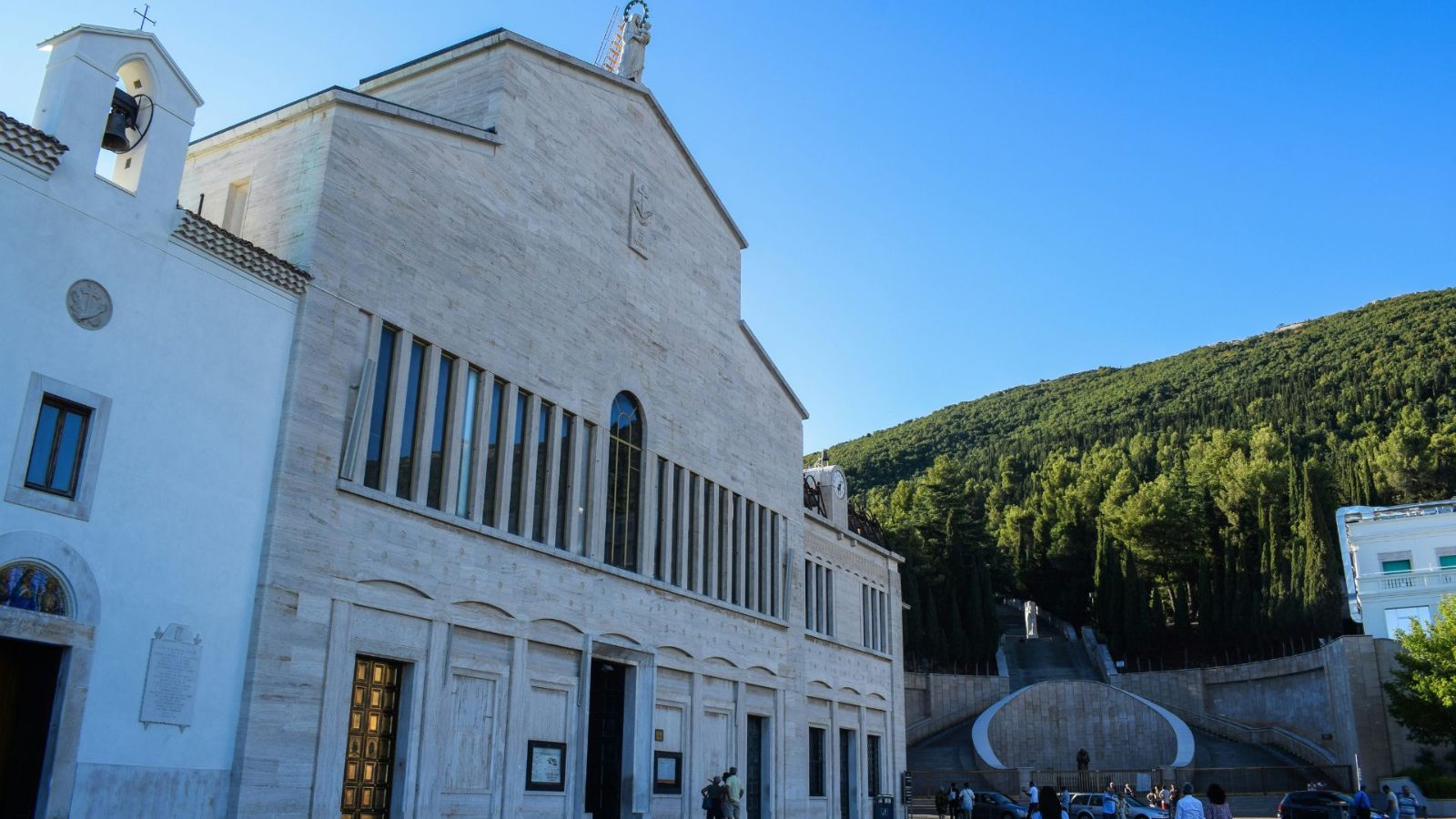
Quick answer
The sanctuary opens Monday, Tuesday, Thursday, Friday, and Saturday at 06:00, Wednesday at 07:00, and Sunday at 06:00; all days close at 19:00. Entry is free, though donations support the site's upkeep. The recommended arrival window is 07:00 to 10:00, before tour groups and midday pilgrims fill the interior. Plan for a four-to-five-hour drive from Rome or a longer journey via Foggia train station and connecting bus.
Padre Pio spent fifty-one years in San Giovanni Rotondo, and his tomb now draws more than seven million pilgrims each year—only the Vatican and Loreto see higher visitor counts among Italy's religious sites. The sanctuary complex, consecrated in 2004, was designed by Renzo Piano and seats 7,000 under a spiraling stone canopy. Reaching it from the capital is not a quick excursion: the sanctuary lies deep in the Gargano hills, far from the high-speed rail corridor that links Rome to southern hubs. Most visitors traveling from Rome rent a car and follow the A1 south to Caserta, then the A16 east toward Foggia, exiting at Foggia Nord and taking provincial roads into the mountains. The final stretch winds through olive groves and limestone ridges; expect the full trip to take four and a half hours in moderate traffic. Travelers without a car face a more segmented route: a Frecciarossa or Intercity train from Roma Termini to Foggia (three and a half to four hours), then a Ferrovie del Gargano bus from Foggia station to San Giovanni Rotondo (another ninety minutes). The bus schedule aligns poorly with early-morning trains, so most pilgrims using public transit arrive in the early afternoon. The sanctuary itself is split between the older Chiesa di Santa Maria delle Grazie, where Padre Pio celebrated Mass and where his original tomb was located until 2010, and the vast modern sanctuary that now holds his glass-sided crypt. Pilgrims move between the two sites on foot; the walk takes five minutes along a covered arcade lined with bronze reliefs depicting the saint's life. The crypt remains the focal point: it occupies the lower level of the new church, and visitors descend a sloping ramp to view the tomb through protective glass. Silence is enforced, photography prohibited. The site sees its heaviest crowds on Sundays and feast days—particularly September 23, the saint's feast—and during Italian school holidays in late December and Easter week. Weekday mornings in spring and autumn offer the calmest environment. Parking near the sanctuary is free but fills quickly after 09:00; overflow lots operate a shuttle service. On-site facilities include a bookshop, a pilgrims' information center, and a modest café near the main entrance plaza. Because the journey from Rome consumes most of a day, many visitors combine the pilgrimage with an overnight stay in the town or a detour to the coastal town of Vieste, forty kilometers north.
“Padre Pio spent fifty-one years in San Giovanni Rotondo, and his tomb now draws more than seven million pilgrims each year.”
Planning Your Journey: How to Get to the Sanctuary of Padre Pio From Rome
The Sanctuary of Saint Pio of Pietrelcina is located in San Giovanni Rotondo, accessible from Rome via a combination of train and regional bus services. Travelers typically transit through Foggia, the nearest major rail hub, to reach the sanctuary.
Trenitalia from Roma Termini to Foggia station
SITA Sud bus from Foggia station to San Giovanni Rotondo
A24 and A25 motorways toward Pescara, then A14 south to Foggia
Daily Opening Hours for the Sanctuary of Padre Pio From Rome
The Sanctuary of Saint Pio of Pietrelcina is open daily to accommodate visitors traveling from Rome. Please review the weekly schedule below to assist in planning your arrival.
| Monday | 06:00–19:00 | |
|---|---|---|
| Tuesday | 06:00–19:00 | |
| Wednesday | 07:00–19:00 | |
| Thursday | 06:00–19:00 | |
| Friday | 06:00–19:00 | |
| Saturday | 06:00–19:00 | |
| Sunday | 06:00–19:00 |
Admission and Fees for Padre Pio From Rome
Access to the Sanctuary of Saint Pio of Pietrelcina is provided at no cost to all visitors. Donations are encouraged to support the ongoing operations and maintenance of the sanctuary.
A typical adult pays 0 EUR for entry, though voluntary donations are accepted to support the sanctuary.
Key Areas to Explore at the Sanctuary of Padre Pio From Rome
The Sanctuary of Saint Pio of Pietrelcina complex encompasses several distinct areas that reflect the spiritual legacy of Padre Pio. Visitors can explore both historic sites and contemporary architectural landmarks dedicated to his life.
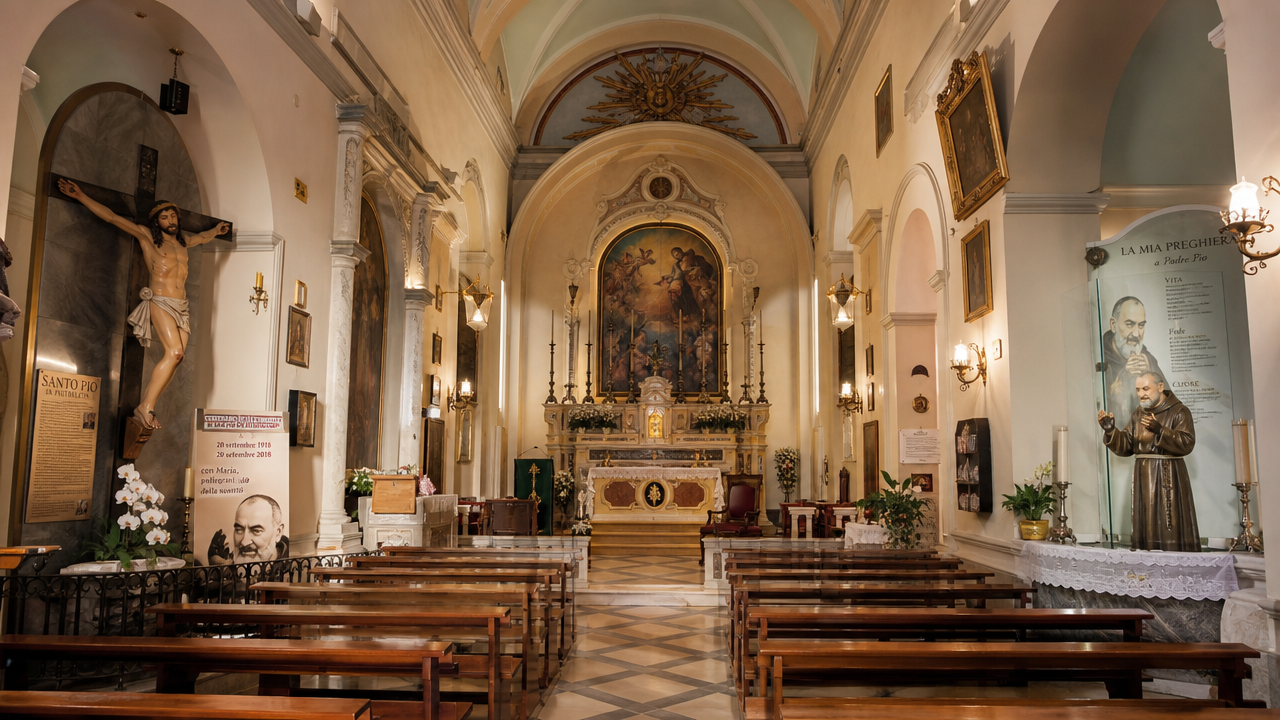
Old Church of Our Lady of Grace
This historic site served as the primary place of worship during Padre Pio's time in San Giovanni Rotondo. It includes the cell where he lived and the location where he received the stigmata.
View the small altar where Padre Pio celebrated daily mass.
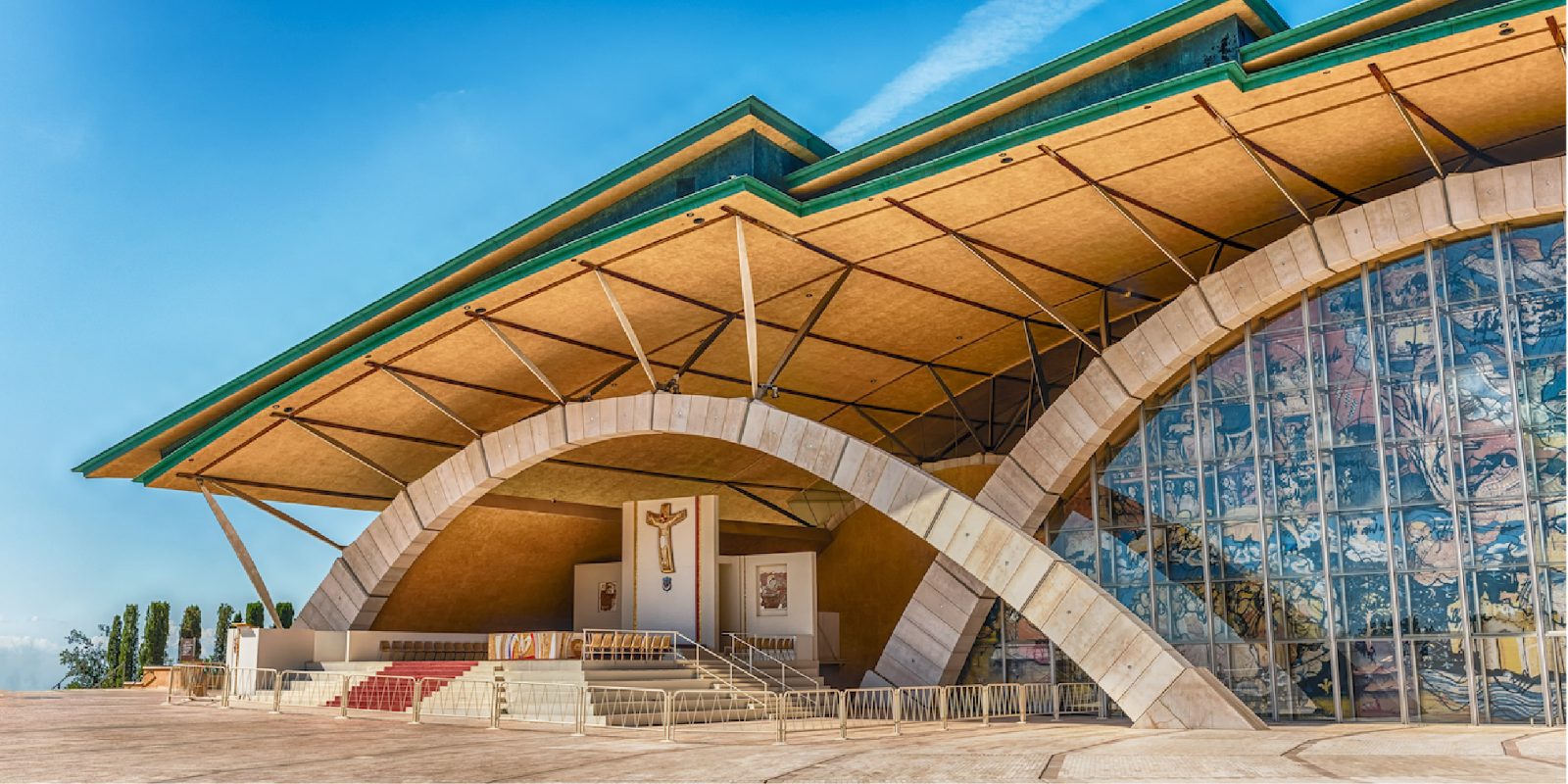
Church of Saint Pio of Pietrelcina
Designed by architect Renzo Piano, this modern basilica is one of the largest churches in Italy. The structure features distinctive stone arches and hosts large-scale liturgical gatherings.
Walk toward the lower level to see the crypt area.
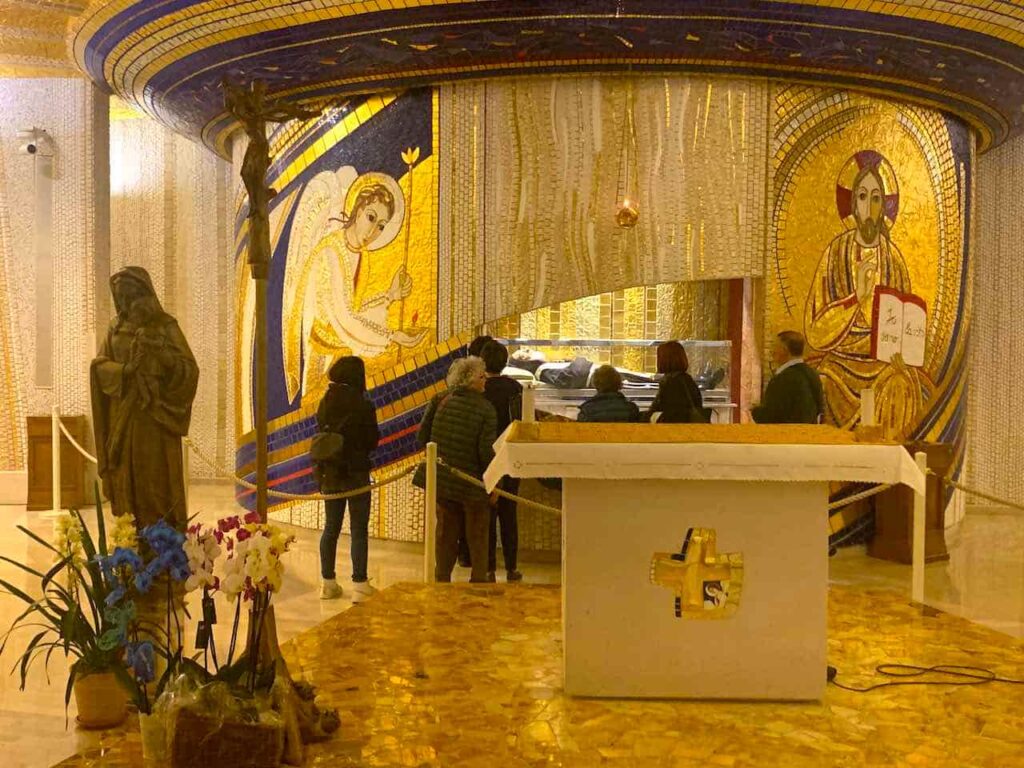
Crypt of Saint Pio
Located beneath the new church, this area houses the remains of the saint. The interior is decorated with gold mosaics created by artist Marko Ivan Rupnik.
Visit early to spend time in the quiet reflection area.
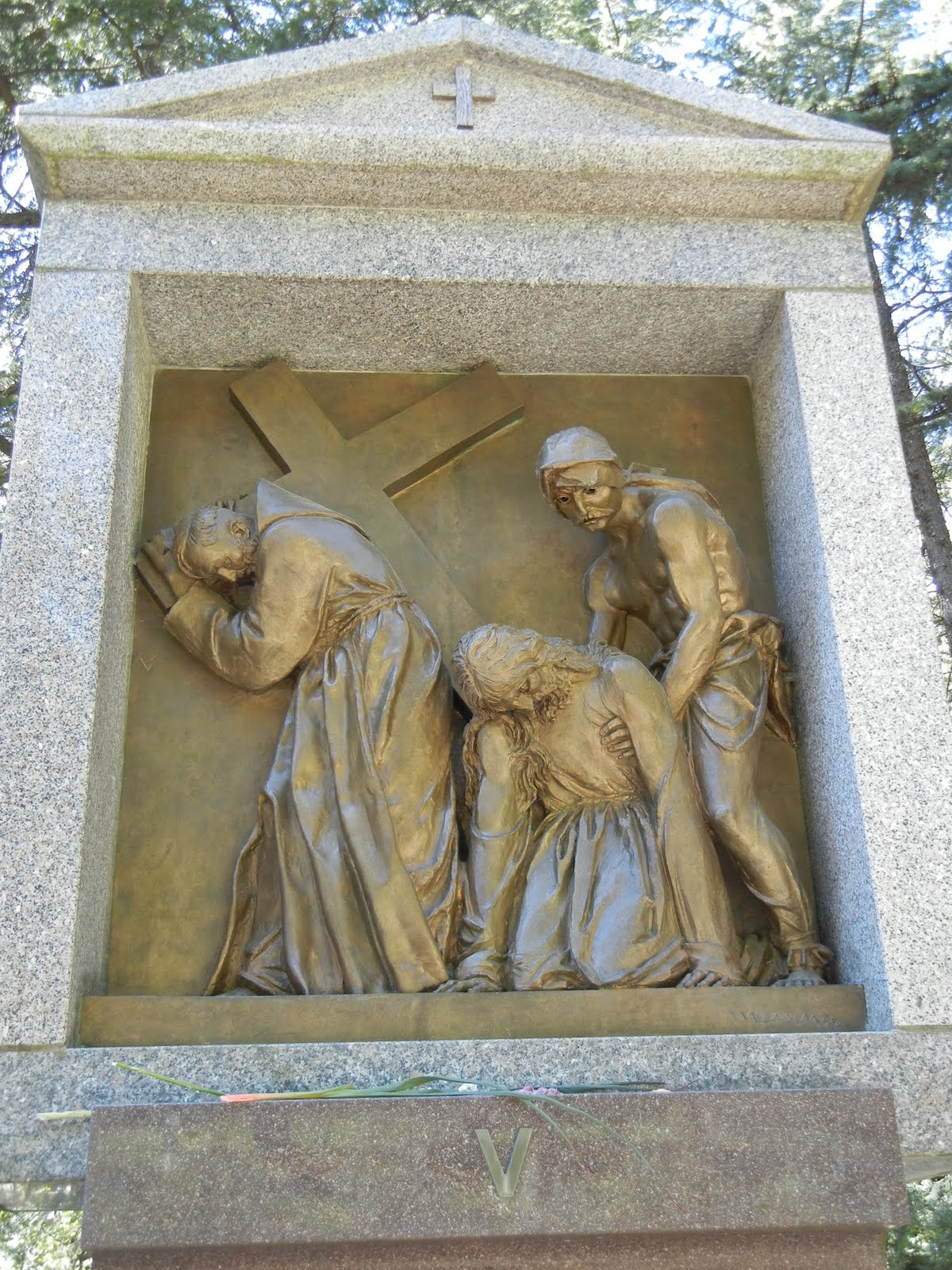
Way of the Cross
This path winds up the hillside of Monte Castellano and features bronze sculptures representing the stations of the cross. The trail provides views of the surrounding Gargano landscape.
Follow the path upward to reach the chapel at the top.
Checklist for Your Trip to the Sanctuary of Padre Pio From Rome
Prepare these items and checks before leaving Rome to ensure a smooth pilgrimage to San Giovanni Rotondo.
-
Book round-trip transport in advance — Buses and organized tours fill quickly, especially on weekends and feast days.
-
Confirm departure time and pickup location — Many tours leave early morning; double-check the meeting point to avoid delays.
-
Review the dress code — Shoulders and knees must be covered; sleeveless tops and shorts are not permitted inside.
-
Bring a head covering if desired — While not required, many female visitors choose to wear a veil or scarf.
-
Pack a reusable water bottle — The journey takes several hours; staying hydrated is important, especially in warmer months.
-
Charge your phone and download offline maps — Mobile signal can be weak in rural areas between Rome and San Giovanni Rotondo.
-
Prepare small bills for donations — The sanctuary accepts donations; ATMs near the site may have limited availability.
Check availability
Frequently asked questions about padre pio from rome
Everything you need to know about padre pio from rome